This app is under development. Passages marked Draft are still being reviewed.
Compare Heritage Objects
Story: Durga vs Mahishasura
Core heritage value: Divine Power
Compare how the same value is communicated differently through medium, setting, and local emphasis.
Selected Heritage Object
Durga vs Mahishasura — Hoysaleswara Temple
A. Durga vs Mahishasura — Hoysaleswara Temple
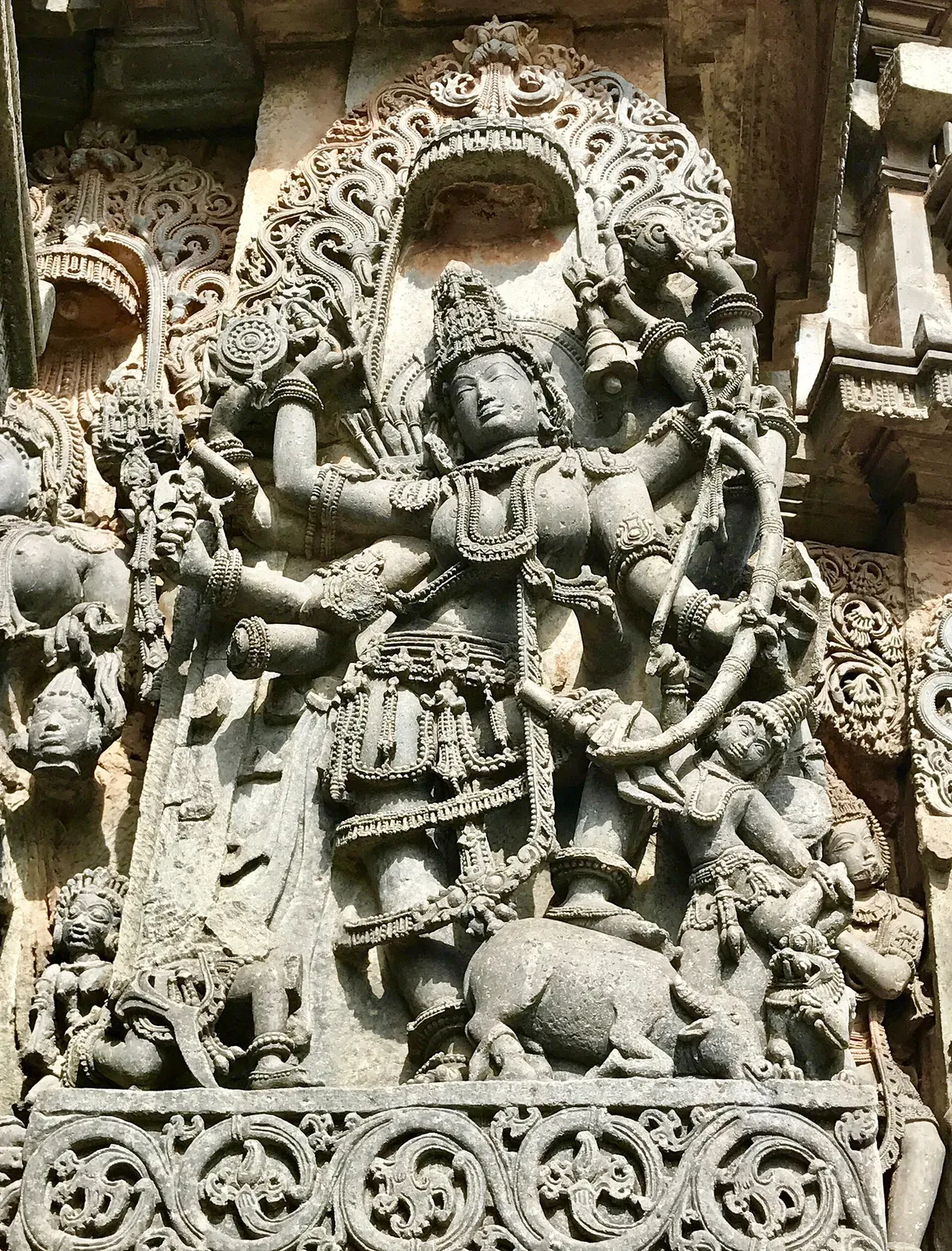

Heritage item: Mahishasuramardini representation at Hoysaleswara Temple
Medium: Temple wall sculpture
Communicator / Context: Hoysala temple patronage and sculptural storytelling
Interpretive summary: This version foregrounds sculptural detail and temple craftsmanship, showing how artistic style itself participates in value communication.
B. Durga vs Mahishasura — Mahabalipuram Cave Temple
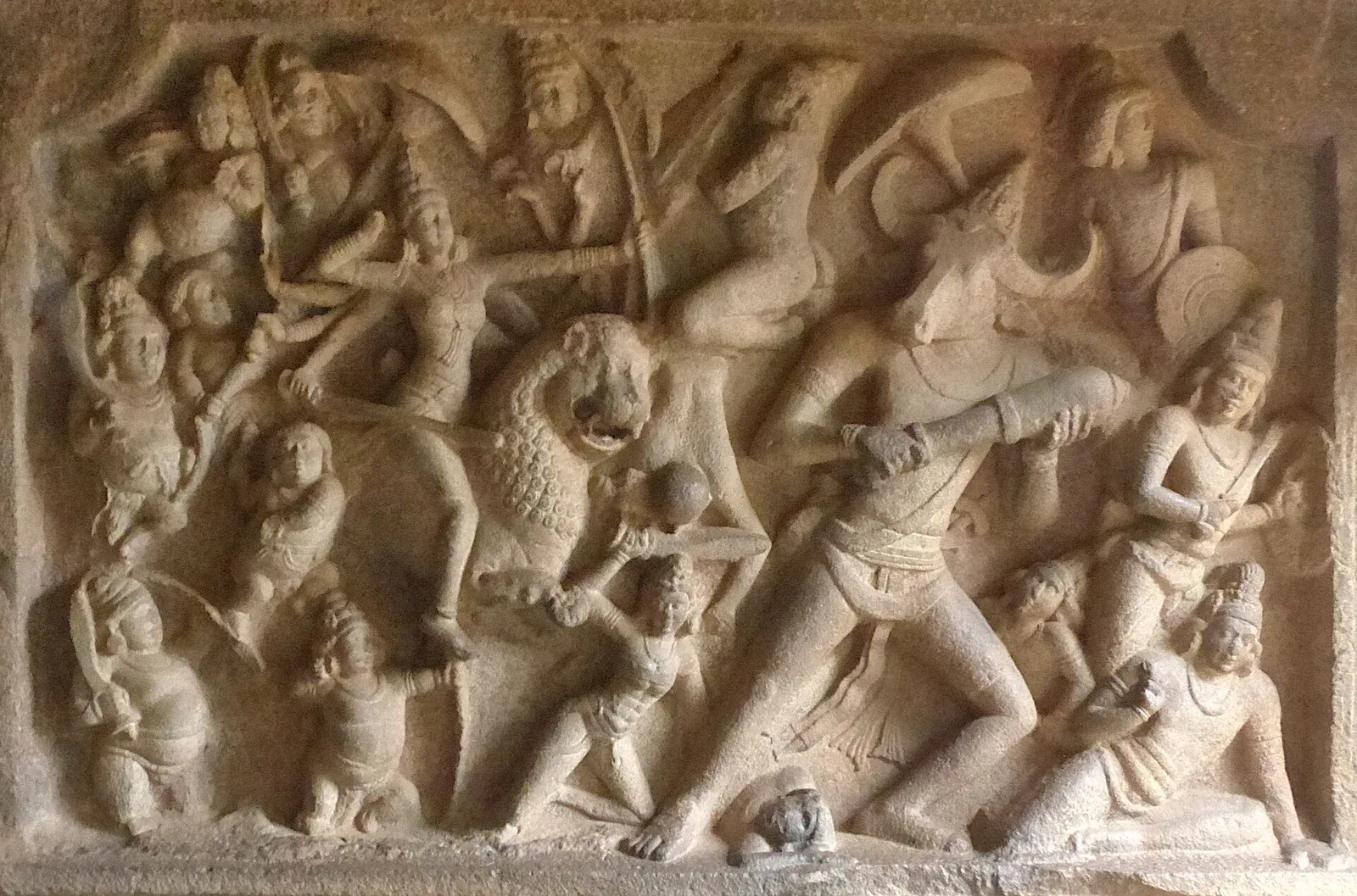

Heritage item: Mahishasuramardini relief at Mahabalipuram
Medium: Rock-cut temple relief
Communicator / Context: Pallava-period temple patronage and sacred architectural setting
Interpretive summary: This representation emphasizes the dramatic struggle itself, making divine victory legible through movement, monumentality, and architectural placement.
Comparison insight
Both heritage objects present Durga’s victory over evil, but the Mahabalipuram relief emphasizes royal cosmic order, while the Halebidu work foregrounds devotional craftsmanship and sculptural density.
General Values
Shared
ProtectionVictory over evil
More foregrounded in A
Divine power
More foregrounded in B
Cosmic order
Contextual Values
Shared contextual layer
No exact shared contextual values tagged yet
Why this matters
Shared narratives may remain legible across sites, but local artistic choices and ritual settings can foreground very different contextual meanings.
A. Durga vs Mahishasura — Hoysaleswara Temple
Heritage item: Mahishasuramardini representation at Hoysaleswara Temple
Medium: Temple wall sculpture
Communicator / Context: Hoysala temple patronage and sculptural storytelling
Interpretive summary: This version foregrounds sculptural detail and temple craftsmanship, showing how artistic style itself participates in value communication.
B. Durga vs Mahishasura — Ellora Cave 16
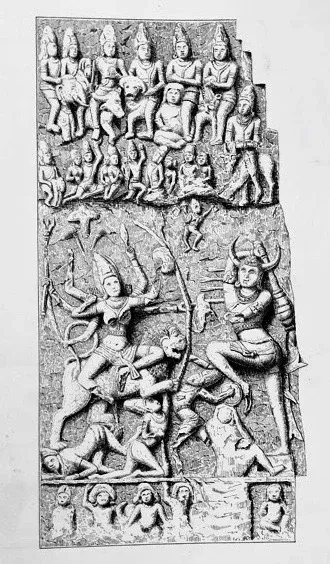

Heritage item: Mahishasuramardini sculpture at Ellora
Medium: Rock-cut cave sculpture
Communicator / Context: Temple-cave visual culture in a monumental ritual environment
Interpretive summary: Here the sculpture communicates not only a mythic victory, but also the authority of the cave-temple environment as a sacred setting of power.
Comparison insight
Ellora integrates the narrative into a broader sacred complex, while Halebidu foregrounds ornamental richness, sculptural intensity, and close devotional attention.
General Values
Shared
Victory over evil
More foregrounded in A
ProtectionDivine power
More foregrounded in B
Divine justiceOrder
Contextual Values
Shared contextual layer
No exact shared contextual values tagged yet
Why this matters
Shared narratives may remain legible across sites, but local artistic choices and ritual settings can foreground very different contextual meanings.
A. Durga vs Mahishasura — Hoysaleswara Temple
Heritage item: Mahishasuramardini representation at Hoysaleswara Temple
Medium: Temple wall sculpture
Communicator / Context: Hoysala temple patronage and sculptural storytelling
Interpretive summary: This version foregrounds sculptural detail and temple craftsmanship, showing how artistic style itself participates in value communication.
B. Durga vs Mahishasura — Chennakesava Temple Draft
Mahishasuramardini sculpture at Chennakesava Temple
Picture to be added
Heritage item: Mahishasuramardini sculpture at Chennakesava Temple
Medium: Temple wall sculpture
Communicator / Context: Hoysala sacred-art patronage
Interpretive summary: At Belur the same victory is framed by temple ornament and devotional refinement, showing how a shared narrative is adapted to a Hoysala sacred setting.
Comparison insight
Both sites share Hoysala artistic traditions, but differences in carving emphasis and setting bring out distinct devotional nuances within the same civilizational narrative.
General Values
Shared
ProtectionVictory over evilDivine power
More foregrounded in A
More foregrounded in B
Contextual Values
Shared contextual layer
Regional artistic excellence
Why this matters
Shared narratives may remain legible across sites, but local artistic choices and ritual settings can foreground very different contextual meanings.