This app is under development. Passages marked Draft are still being reviewed.
Compare Heritage Objects
Story: Narasimha vs Hiranyakashipu
Core heritage value: Justice
Compare how the same value is communicated differently through medium, setting, and local emphasis.
Selected Heritage Object
Narasimha vs Hiranyakashipu — Mahabalipuram Cave Temple
A. Narasimha vs Hiranyakashipu — Mahabalipuram Cave Temple Draft
Narasimha representation at Mahabalipuram
Picture to be added
Heritage item: Narasimha representation at Mahabalipuram
Medium: Rock-cut relief
Communicator / Context: Pallava-period temple patronage and sacred architectural setting
Interpretive summary: The Pallava idiom presents justice with economy and calm authority, linking divine intervention to the ideals of rightful rule.
B. Narasimha vs Hiranyakashipu — Hoysaleswara Temple Draft
Narasimha sculpture at Hoysaleswara Temple
Picture to be added
Heritage item: Narasimha sculpture at Hoysaleswara Temple
Medium: Temple wall sculpture
Communicator / Context: Hoysala temple patronage and sculptural storytelling
Interpretive summary: Set among many deities on a Shiva temple, this Narasimha shows justice as part of a shared sacred world rather than the claim of a single tradition.
Comparison insight Draft
The Halebidu sculpture surrounds the tyrant’s defeat with intricate detail and dynastic display, while the Mahabalipuram idiom is spare, giving justice a calm and royal authority.
General Values
Shared
JusticeProtection
More foregrounded in A
More foregrounded in B
Victory over evil
Contextual Values
Shared contextual layer
No exact shared contextual values tagged yet
Why this matters
Shared narratives may remain legible across sites, but local artistic choices and ritual settings can foreground very different contextual meanings.
A. Narasimha vs Hiranyakashipu — Mahabalipuram Cave Temple Draft
Narasimha representation at Mahabalipuram
Picture to be added
Heritage item: Narasimha representation at Mahabalipuram
Medium: Rock-cut relief
Communicator / Context: Pallava-period temple patronage and sacred architectural setting
Interpretive summary: The Pallava idiom presents justice with economy and calm authority, linking divine intervention to the ideals of rightful rule.
B. Narasimha vs Hiranyakashipu — Chennakesava Temple
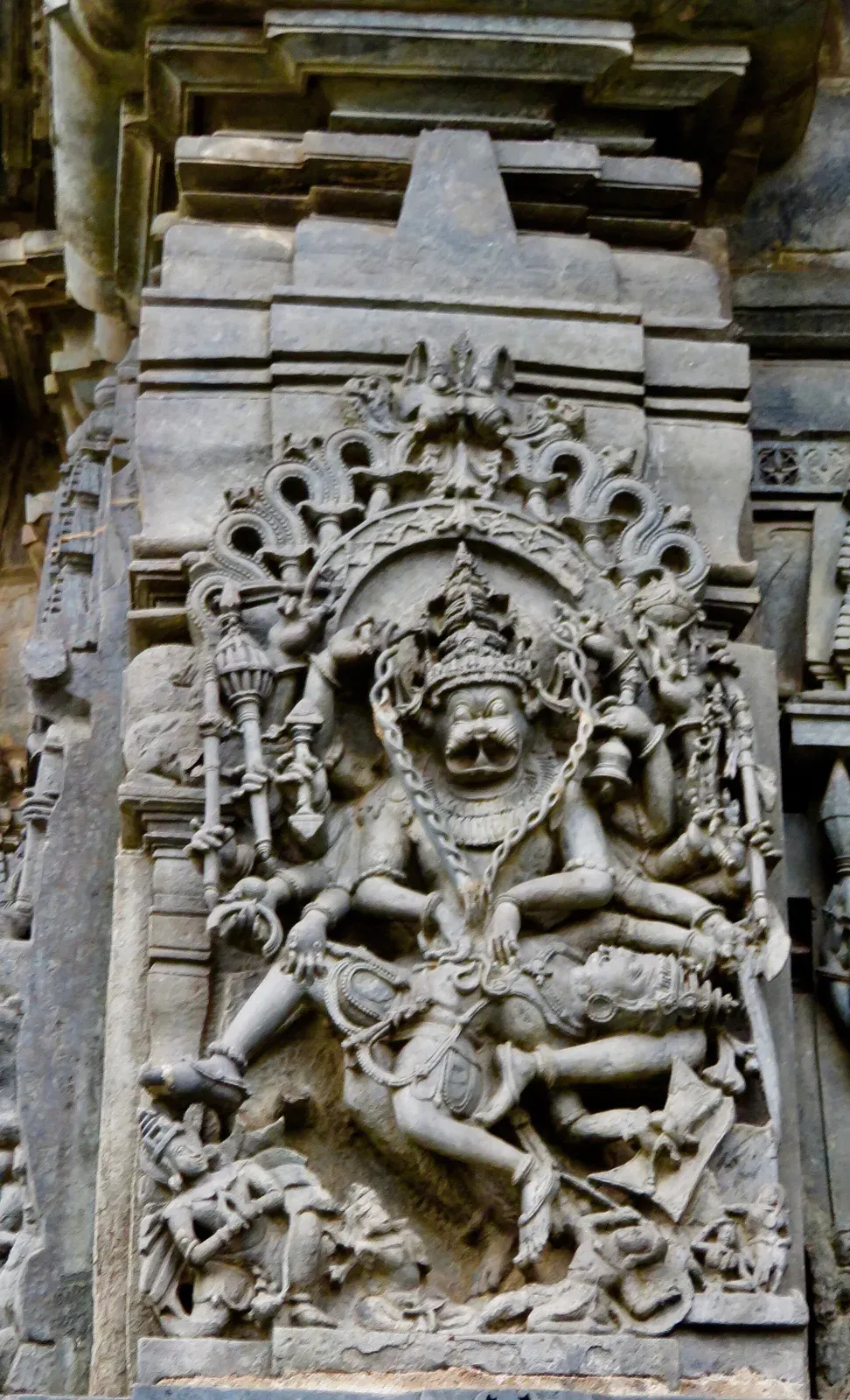

Heritage item: Temple sculpture at Chennakesava Temple
Medium: Temple wall sculpture
Communicator / Context: Hoysala sacred-art patronage
Interpretive summary: The representation communicates narrative meaning through temple ornament and devotional framing.
Comparison insight Draft
The narrative remains the same, yet Belur emphasizes temple-centered devotion and ornament, while Mahabalipuram gives stronger emphasis to royal authority and restraint.
General Values
Shared
JusticeProtection
More foregrounded in A
More foregrounded in B
Contextual Values
Shared contextual layer
No exact shared contextual values tagged yet
Why this matters
Shared narratives may remain legible across sites, but local artistic choices and ritual settings can foreground very different contextual meanings.
A. Narasimha vs Hiranyakashipu — Mahabalipuram Cave Temple Draft
Narasimha representation at Mahabalipuram
Picture to be added
Heritage item: Narasimha representation at Mahabalipuram
Medium: Rock-cut relief
Communicator / Context: Pallava-period temple patronage and sacred architectural setting
Interpretive summary: The Pallava idiom presents justice with economy and calm authority, linking divine intervention to the ideals of rightful rule.
B. Narasimha vs Hiranyakashipu — Ellora Cave 16 Draft
Narasimha panel at Ellora Cave 16
Picture to be added
Heritage item: Narasimha panel at Ellora Cave 16
Medium: Rock-cut relief panel
Communicator / Context: Temple-cave visual culture in a monumental ritual environment
Interpretive summary: In the cave-temple, justice is communicated through scale and setting: the tyrant’s defeat becomes part of the visitor’s passage through a sacred mountain of stone.
Comparison insight Draft
Both are cut from living rock, but Ellora places Narasimha within a vast sculptural program, whereas Mahabalipuram presents its narratives as more direct statements tied to Pallava kingship.
General Values
Shared
Justice
More foregrounded in A
Protection
More foregrounded in B
Protection of devotionOrder
Contextual Values
Shared contextual layer
No exact shared contextual values tagged yet
Why this matters
Shared narratives may remain legible across sites, but local artistic choices and ritual settings can foreground very different contextual meanings.