This app is under development. Passages marked Draft are still being reviewed.
Compare Heritage Objects
Story: Rama vs Ravana
Core heritage value: Righteous Kingship
Compare how the same value is communicated differently through medium, setting, and local emphasis.
Selected Heritage Object
Rama vs Ravana — Mahabalipuram Cave Temple
A. Rama vs Ravana — Mahabalipuram Cave Temple Draft
Rama and Ravana representation at Mahabalipuram
Picture to be added
Heritage item: Rama and Ravana representation at Mahabalipuram
Medium: Rock-cut relief
Communicator / Context: Pallava-period temple patronage and sacred architectural setting
Interpretive summary: In a royal Pallava setting the narrative reads as a statement about kingship itself: power is legitimate when it serves order.
B. Rama vs Ravana — Lakshmana Temple
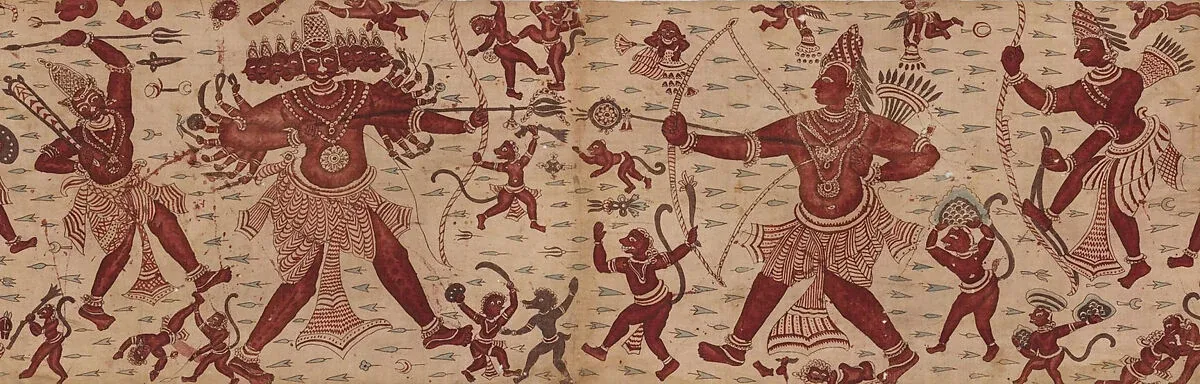
Heritage item: Narrative temple sculpture at Lakshmana Temple
Medium: Temple wall relief
Communicator / Context: Temple patronage and sacred architectural narrative
Interpretive summary: This sculpture places moral victory within a broader temple narrative system tied to sacred kingship and ordered rule.
Comparison insight Draft
The narrative remains the same, yet Khajuraho frames it through structural temple sculpture and ordered rule, while the Mahabalipuram context links it to Pallava royal authority in a rock-cut setting.
General Values
Shared
RighteousnessOrder
More foregrounded in A
More foregrounded in B
Contextual Values
Shared contextual layer
No exact shared contextual values tagged yet
Why this matters
Shared narratives may remain legible across sites, but local artistic choices and ritual settings can foreground very different contextual meanings.
A. Rama vs Ravana — Mahabalipuram Cave Temple Draft
Rama and Ravana representation at Mahabalipuram
Picture to be added
Heritage item: Rama and Ravana representation at Mahabalipuram
Medium: Rock-cut relief
Communicator / Context: Pallava-period temple patronage and sacred architectural setting
Interpretive summary: In a royal Pallava setting the narrative reads as a statement about kingship itself: power is legitimate when it serves order.
B. Rama vs Ravana — Ellora Cave 16 Draft
Ramayana relief panel at Ellora Cave 16
Picture to be added
Heritage item: Ramayana relief panel at Ellora Cave 16
Medium: Rock-cut narrative relief
Communicator / Context: Temple-cave visual culture in a monumental ritual environment
Interpretive summary: At Ellora the victory is narrated step by step, so righteousness appears as a sequence of choices and trials rather than a single triumphant moment.
Comparison insight Draft
Both are rock-cut, but Ellora tells the epic at length as a sequence of scenes, whereas the Mahabalipuram idiom favours fewer figures and a more direct statement of royal order.
General Values
Shared
RighteousnessOrder
More foregrounded in A
More foregrounded in B
Victory over evil
Contextual Values
Shared contextual layer
No exact shared contextual values tagged yet
Why this matters
Shared narratives may remain legible across sites, but local artistic choices and ritual settings can foreground very different contextual meanings.
A. Rama vs Ravana — Mahabalipuram Cave Temple Draft
Rama and Ravana representation at Mahabalipuram
Picture to be added
Heritage item: Rama and Ravana representation at Mahabalipuram
Medium: Rock-cut relief
Communicator / Context: Pallava-period temple patronage and sacred architectural setting
Interpretive summary: In a royal Pallava setting the narrative reads as a statement about kingship itself: power is legitimate when it serves order.
B. Rama vs Ravana — Hoysaleswara Temple Draft
Ramayana frieze at Hoysaleswara Temple
Picture to be added
Heritage item: Ramayana frieze at Hoysaleswara Temple
Medium: Narrative frieze on the temple wall
Communicator / Context: Hoysala temple patronage and sculptural storytelling
Interpretive summary: The frieze turns the epic into a walkable story, where craftsmanship and repetition make righteous conduct a shared and familiar ideal.
Comparison insight Draft
The Mahabalipuram context foregrounds royal authority and restraint, while the Halebidu frieze foregrounds devotional craftsmanship and the pleasure of following a story in stone.
General Values
Shared
RighteousnessOrder
More foregrounded in A
More foregrounded in B
Duty
Contextual Values
Shared contextual layer
No exact shared contextual values tagged yet
Why this matters
Shared narratives may remain legible across sites, but local artistic choices and ritual settings can foreground very different contextual meanings.